This guide is original editorial content. Linked public sources and directory listings should be checked again for live schedules, closures, prices and access rules.
Drive south once: Key Largo toward Key West
The Florida Keys look compact on a map, but U.S. 1—the Overseas Highway—is a two-lane lifeline through much of the island chain. Bridges, weekend traffic, road work or a crash can make a short distance take longer than the map suggests, and there is no useful detour when the line stops. Mile markers decrease as you drive toward Key West. Key Largo sits roughly MM 107–97; first-timers usually plan the trip as MM 100 → 0, southbound, so each move day rides the highway once.
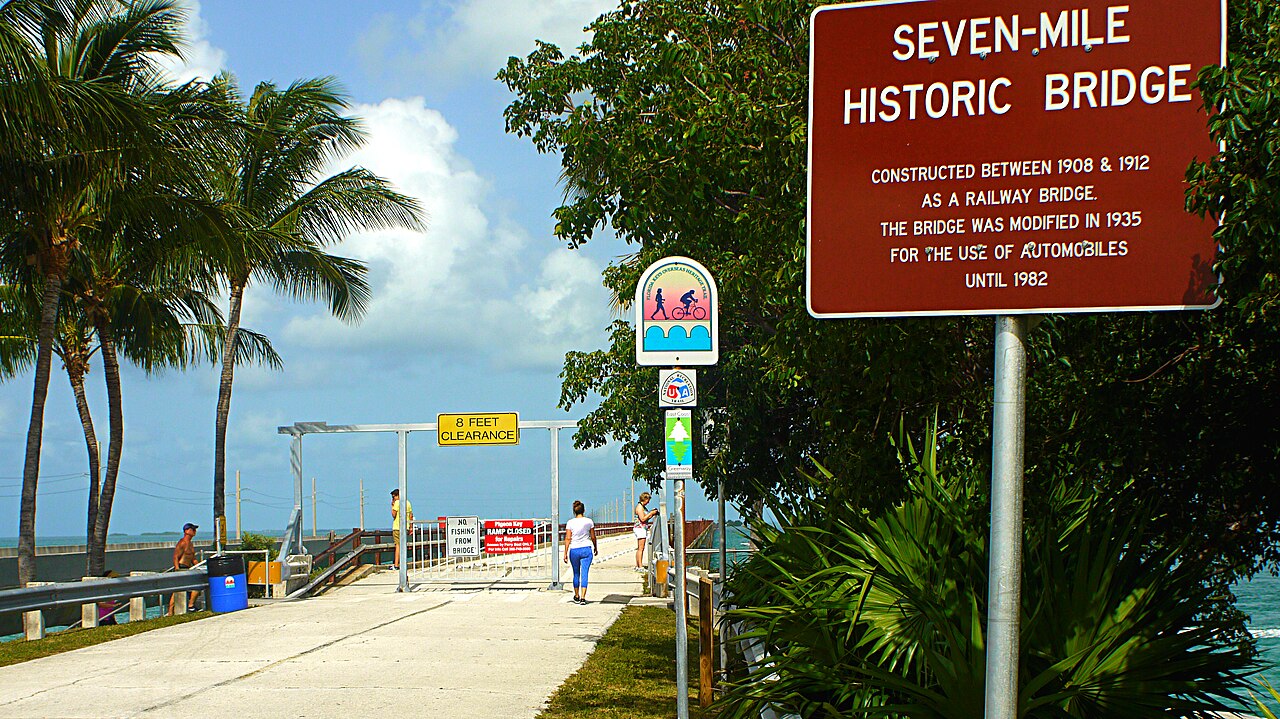
Upper Keys (Key Largo, Tavernier, Islamorada, about MM 107–72) are the easy first night after South Florida: reef boats, parks and a fishing village. Middle Keys (Layton and Long Key through Marathon and Key Colony Beach, about MM 72–47) are the service hinge around Seven Mile Bridge. Lower Keys (Bahia Honda through Big Pine and the islands toward Big Coppitt, about MM 37–9) trade nightlife for beaches, wildlife and quieter evenings. Key West and Stock Island (about MM 5–0) are a destination block, not a photo stop at the end of a Miami day.
If someone in the group still wants to “just drive to Key West for the day,” read Key West day trip from Miami: honest timing, drive time and better alternatives before you build the week around that idea. A same-day sprint from South Florida spends the morning in the car and the evening on the return. Give MM 0 its own nights, then use Where to stay in the Florida Keys: best base by Key for a 5–7 night trip when the question is which island gets the pillow.
- Plan southbound: Upper Keys, then Mid-Keys, then Key West.
- Mile markers decrease toward Key West—use them when an address is hard to spot from U.S. 1.
- Do not reverse the chain every day.
- Never stop in a travel lane to photograph wildlife or a sunset.
Nights per stretch: four nights, a week, and the hinge
Four nights (two bases) is the short first-timer pattern. Nights 1–2 in Key Largo, Tavernier or Islamorada for reef access and an easier arrival from South Florida; nights 3–4 in Key West. Drive the Middle and Lower Keys as one transit day with one planned stop—Marathon lunch, groceries and fuel, or Bahia Honda day-use if you have checked park conditions—rather than a third hotel. Open Key Largo, Islamorada and Key West to shortlist lodging and food before you book.
Five to seven nights supports two or three bases. Keep two Upper or Mid-Keys nights, add one Marathon hinge night (sometimes two) if you want a real pillow near Seven Mile Bridge, then finish with two or three Key West nights. That hinge is rest and resupply, not a third sightseeing circuit. If those Marathon nights are the point of the trip, Marathon as a Mid-Keys base: day plan is the day-radius. For hotel versus rental versus camp, stay with Where to stay in the Florida Keys: best base by Key for a 5–7 night trip.
A week or longer can add one dedicated Lower Keys night—Bahia Honda only if you actually hold a campsite, or Big Pine if wildlife and provisioning are the reason—without a hotel move every afternoon. Do not try to “do” every island. One signature activity per base is the trip. A longer week still does not turn Dry Tortugas into a Marathon checkout errand.
- Short trip: two bases beat four packing days.
- Marathon hinge: sleep, fuel, groceries—then keep driving on purpose.
- Week-plus: one Lower Keys night only if the camp or the wildlife stop is the reason.
- Protect an unplanned hour on any day with a fixed reservation.
Overnight bases: which Key gets the pillow
Sleep in Key Largo when the scarce morning is a Pennekamp or reef-boat check-in. The island is long; match the hotel mile marker to the dock or park so dawn is not a hidden U.S. 1 commute. Tavernier is the services and Harry Harris island between Key Largo and the fishing village—not a hidden Key Largo suburb name. Islamorada is the pillow when the charter marina, dinner strip and village mile marker are the point of the Upper stay. A Marathon hotel is the wrong dawn base for an Islamorada fishing morning.
Marathon is the Mid-Keys service hub: groceries, marinas, fuel and everyday errands between the bridges. Use it as a multi-night base when the Mid-Keys are the trip, or as one hinge night when the week is Upper Keys then Key West. Duck Key and Key Colony Beach can share a “Marathon” mailing address while sitting off the stretch you thought you booked—confirm the island before you pay. Layton and Long Key (Layton & Long Key) are a quieter drive-through and park stretch, not the default first-timer pillow.
Bahia Honda is a state park, not a town. It is an overnight only when you hold a campsite; otherwise it is a day-use stop on a transit day. Big Pine Key is the Lower Keys grocery, fuel and Key deer base. Key West gets the walking nights, sunset and any Dry Tortugas morning. Stock Island is the working-waterfront spillover when Old Town is sold out—not a substitute beach town. Compare pillows on Hotels & Lodging by island, then confirm parking, pets, trailers and fees with the property. Verified source means stronger source verification, not a paid rank, and organic directory order is unsold.
- Reef morning: Key Largo pillow near the dock or park.
- Fishing morning: Islamorada, not Marathon.
- Park camp: Bahia Honda only with a reservation.
- Old Town sold out: Stock Island, then a short hop—not another highway commute.
Windshield traps that eat a driving day
The highway itself is the first trap. Much of the Overseas Highway is two lanes with bridges, limited passing and nowhere to hop off. Treat a Key Largo-to-Old Town run as a half-day of windshield time before you even look for parking; the return is the same road. Photo stops, a crash, road work or weekend traffic all sit on that single line. Build the day as transit plus one stop, not as five islands.
Park entry is the second trap. Bahia Honda day-use is a separate product from camping. Florida State Parks warns the park may close temporarily when day-use areas reach capacity, especially on weekends and holidays. A full lot is not an invitation to park on the U.S. 1 shoulder. Keep a legal backup shoreline on the same stretch—see Florida Keys beaches by Key: swimming, parking and honest expectations and Parks & Beaches—and confirm current entrance guidance on the park page the morning you go. This guide does not quote gate fees.
Ferry and seaplane timing is the third trap. Dry Tortugas National Park sits about 70 miles west of Key West and is reached only by boat or seaplane. Check-in is a Key West morning, not a Marathon checkout and not a Miami stack. Read Dry Tortugas day trip from Key West: ferry vs seaplane planner and give Key West a night before you buy a seat. A cruise half-day in Old Town is a different job; Key West parking and cruise day: pier, Old Town and honest timing covers pier timing and park-once logistics, and it is still not a Garden Key window. Live schedules belong on the National Park Service and the concession operator, not on a directory card.
Fuel and charging are the fourth trap. Top off on a service island—Key Largo, Marathon, Big Pine or Key West—before you commit across a long bridge, not when the gauge is already a problem. Use Florida Keys gas stations and EV charging: plan Overseas Highway stops by Key with Gas Stations and EV Charging. Directory cards are not live pump hours, and marina fuel is not a 24-hour highway station.
- One transit day, one planned stop.
- Bahia Honda day-use can hit capacity—keep a legal backup, not the shoulder.
- Tortugas needs a Key West night before check-in.
- Fuel or charge on a service island before the long bridge.
One job per base: reef, fishing, hub, beach, Old Town
Pick the scarce morning before you fill the afternoon. An Upper Keys reef or snorkel day belongs on Key Largo snorkeling day: Pennekamp, reef boats and honest logistics: Pennekamp, a concession boat or a dive-shop trip, plus a land backup if the water moves. An Islamorada fishing morning belongs on Islamorada fishing day: ramp, tackle and charter checklist. If you are launching yourself, use Florida Keys boat ramps: fees, parking and launches by Key and Public Boat Ramps & Docks, and browse operators on Tours, Rentals & Outfitters only as a map—not a ranking. Do not stack a reef dawn and a fishing dawn and then drive to Key West.
A Marathon day is a hub day: one boat or one shoreline, groceries, and fuel—not Islamorada at dawn plus Bahia Honda plus Old Town. Use Marathon as a Mid-Keys base: day plan. A beach morning is one shoreline, not a tour of every sandy spot; Florida Keys beaches by Key: swimming, parking and honest expectations separates a swim from a photo stop. Seed a skeleton from the island day kits, then cut it to what the drive will actually hold.
Key West nights are for walking, a meal and whatever you came for the next morning. Park once when you can. If the group is car-free for that block, Florida Keys without a car: Key West, buses, and when you still need to rent covers Miami-Dade Route 301 (Miami-Dade Route 301 — Dade–Monroe Express), the Lower Keys Shuttle and walkable nodes—it does not erase the highway between islands. Live timetables stay on the operator pages. Save one primary stop and one backup per day on Trip planner.
- One scarce morning per base.
- Reef day and fishing day are different pillows.
- Key West night before any Tortugas or full Old Town day.
- Cut the day kit to the drive you actually have.
Camping, boat ramps and rigs before you commit
State-park campsites and many private RV parks are reservation products. Popular parks fill on holiday and peak weekends. Book the scarce site before you obsess over restaurants. Start with Florida Keys campgrounds & RV parks: public vs private, booking windows and rig limits and Bahia Honda camping: Buttonwood, Sandspur & Bayside loops, then confirm Florida State Parks or the park’s own system for the booking window, rig length and cancel rules. A preferred month on social media does not create a loop. Garden Key camping at Dry Tortugas is a different, primitive product—not an RV substitute for a Keys highway week.
If you are towing a boat, match the launch to the same highway stretch as the pillow. An Upper Keys small-boat ramp or an Islamorada charter dock is not interchangeable with a Key West ramp you will reach after dark. Read Florida Keys boat ramps: fees, parking and launches by Key, compare mapped launches on Public Boat Ramps & Docks, and save a backup. Confirm length, clearance, trailer parking and any resident-use rules on the operator page before you pay; island properties are tighter than mainland travelers expect. Marinas & Boating is the dock and charter map, not a promise a slip is open.
A rental kitchen only helps if a grocery island is part of that night. Pair the base with Groceries & Supplies. Ice, bait and fuel belong on the same service stop when you can, not as three extra U-turns across U.S. 1. Browse Campgrounds & RV Parks when the night is a reserved camp, and Hotels & Lodging when it is a hinge hotel.
- Hold the campsite before the rest of the week.
- Towing: launch and pillow on the same stretch.
- Confirm rig length and overhead clearance before you pay.
- Groceries on a service island, not “somewhere on the way.”
How to use the directory and trip planner
The directory is organized by island so you can switch from pacing to logistics. Open the Key you will sleep on—Key Largo, Tavernier, Islamorada, Marathon, Big Pine Key, Bahia Honda, Key West, Stock Island—then one category hub for the job: Hotels & Lodging, Parks & Beaches, Gas Stations or Groceries & Supplies. Save a pharmacy (Pharmacies) and an urgent-care clinic (Hospitals & Urgent Care) for each overnight base before you need them.
Cell service can be uneven offshore and during storms, so keep reservation confirmations and addresses available offline. In hot months, carry more drinking water than a mainland day needs and do not leave medication or electronics in a parked car. When the overnight map is honest, move the same stops into Trip planner: bases, one primary activity, one backup, and a fuel or charge stop.
Re-open each listing’s source link the morning you go. Hours, closures, parking rules and booking terms change faster than geography. The Verified source label means stronger verification, not a purchased rank, and organic directory order is unsold. We do not sell highway position or itinerary slots. This page is original editorial—not live traffic, a fare table, or a promise that a park gate, ferry or campground is open on your date.
- Island page first, then one category hub.
- Trip planner: bases, one activity, one backup, fuel.
- Source link the morning you go.
- No pay-to-rank and no invented hours.
Frequently asked questions
How many nights do I need for a first-time Florida Keys road trip?
Two bases and four nights is the short pattern: two Upper Keys nights, then two Key West nights, with the Middle and Lower Keys as one transit day. Five to seven nights supports a Marathon hinge or a real Lower Keys camp. One hotel for the whole chain, or a new island every afternoon, both burn the trip in packing and windshield time. Use Where to stay in the Florida Keys: best base by Key for a 5–7 night trip once the night counts are set, and save the sequence on Trip planner.
Can I drive from Miami to Key West and back in one day?
You can put the car on U.S. 1, but it is a poor first-timer plan. The Overseas Highway is mostly two lanes with bridges and no useful detour, and a Key Largo-to-Old Town run is already a half-day of windshield time before parking—the return is the same road. Read Key West day trip from Miami: honest timing, drive time and better alternatives, then give Key West a night. A closer Upper or Mid-Keys day fits a South Florida clock better than MM 0.
Where should I stay overnight between Key Largo and Key West?
Match the pillow to the scarce morning. Key Largo or Tavernier for a reef or Pennekamp dawn, Islamorada for a fishing-village morning, Marathon for a Mid-Keys hub or a single hinge night, Big Pine for Lower Keys services, Bahia Honda only with a reserved campsite, and Key West—or Stock Island if Old Town is sold out—for walking and any Dry Tortugas check-in. Compare Hotels & Lodging by island. Verified source is not a paid rank, and organic directory order is unsold.
What slows a Florida Keys driving day besides the miles?
The road itself: two lanes, bridges, limited passing, weekend traffic, road work and crashes with no alternate highway. Then the stops people treat as free—a full Bahia Honda day-use lot, Old Town parking, a reef-boat or charter meet, and a Dry Tortugas ferry or seaplane check-in that only works from Key West. Plan one transit day with one stop. Do not build the day as five islands.
Can I add Dry Tortugas to a first Keys road trip?
Yes, after a Key West-area night is already on the calendar. The park is about 70 miles west of Key West and is reached only by boat or seaplane, with an early check-in. It is not a drive from Marathon and not a same-day Miami stack. Use Dry Tortugas day trip from Key West: ferry vs seaplane planner, shortlist Key West or Stock Island, and keep a land backup if weather moves the crossing. This guide does not quote fares or departure clocks.
Should I camp on a first Florida Keys road trip?
Only if you already hold the site. Popular state-park and private RV inventories are reservation products. Bahia Honda is a park, not a town you roll into at dusk. Start with Florida Keys campgrounds & RV parks: public vs private, booking windows and rig limits and Bahia Honda camping: Buttonwood, Sandspur & Bayside loops, and confirm rig limits on the official reservation page. A hotel is less friction for a one-night hinge. Garden Key camping is a separate primitive trip, not an RV plan.
Where should I get gas or charge an EV on the Overseas Highway?
On a service island before a long bridge, not when the gauge is already low. Key Largo, Marathon, Big Pine and Key West are the practical clusters most first-timers use. The stop-by-stop map is Florida Keys gas stations and EV charging: plan Overseas Highway stops by Key, with Gas Stations and EV Charging. Directory cards are not live pump hours, and marina fuel is not a highway station.
Is Marathon only a lunch stop on the way to Key West?
It can be. On a four-night, two-base trip, Marathon is the honest transit stop: food, groceries, fuel, then keep driving to the Key West pillow. Give it a night when you want a Mid-Keys base or you do not want to do MM 100 → 0 in one windshield. It is the wrong dawn base for an Islamorada charter and the wrong check-in city for Dry Tortugas. Use Marathon as a Mid-Keys base: day plan when Marathon is the hub.