This guide is original editorial content. Linked public sources and directory listings should be checked again for live schedules, closures, prices and access rules.
Fuel before the long bridges, not after
The Overseas Highway is one road with no useful detour. Much of it is two lanes, bridges, limited passing and nowhere to “just hop off” if a pump is closed or a charger is occupied. Treat fuel and charging as a planning layer, the same way you treat lodging on /guides/first-time-florida-keys-road-trip: decide the stop before the gap, not when the gauge is already a problem.
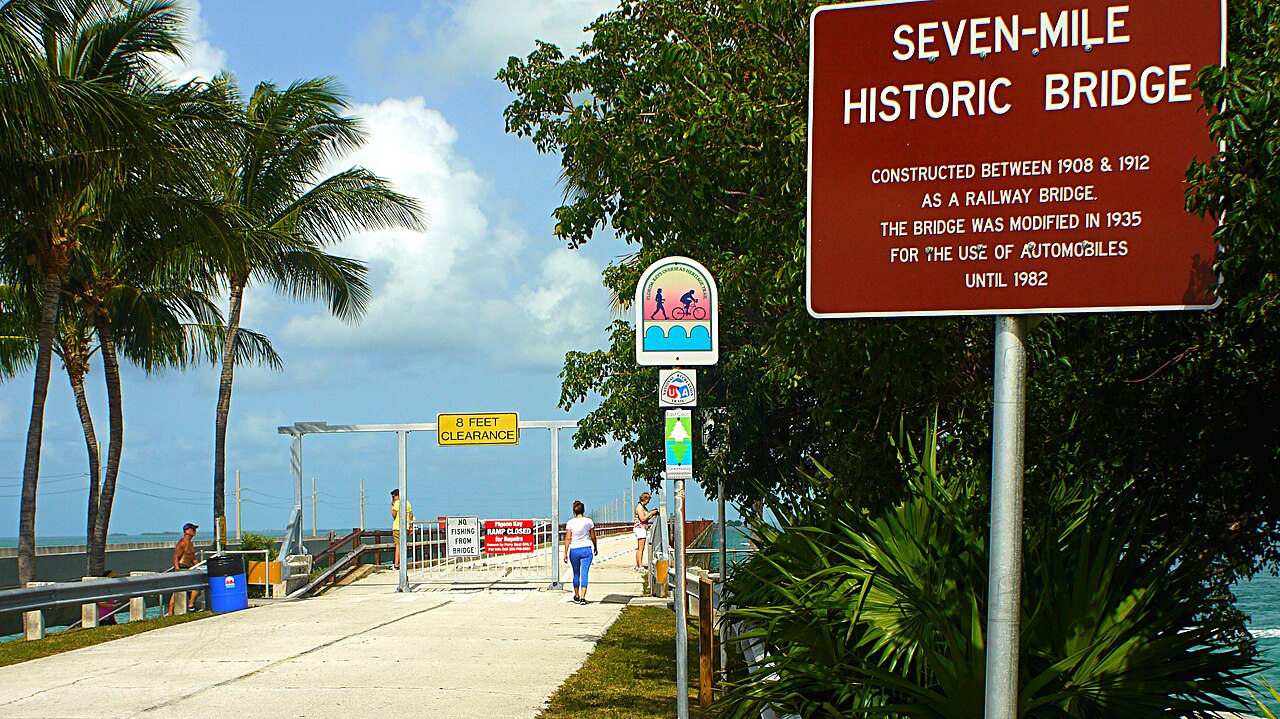
Long bridges and quieter stretches are where first-timers get caught. Southbound, Marathon sits at the east end of Seven Mile Bridge; once you commit across, the next full-service island cluster is not a mainland strip-mall. The Lower Keys after Bahia Honda have everyday services, but they are spaced farther apart than Key Largo or Islamorada. A low tank plus weekend traffic, a crash, or a station that is already closed is a worse combination here than on I-95.
KeysCompass does not publish live fuel prices and does not rank “cheapest gas in the Florida Keys.” Hours, pump access, diesel, air, pay-at-pump and after-dark availability change. Open /categories/gas-stations, pick the island you will actually drive, then confirm the listing’s source link before you rely on that pin. The same honesty applies to charging: use /ev-charging, then the operator app.
- Top off before Seven Mile, not after you are already on it.
- Do not treat yesterday’s open pump as tonight’s guarantee.
- Directory pins are locations—confirm hours and access on the source link.
Upper vs Mid vs Lower Keys: service density is not even
Upper Keys (roughly MM 107–72) are the densest highway-service stretch for most first-timers coming from South Florida. Key Largo (/keys/key-largo) is the gateway: more U.S. 1 frontage, more everyday pumps, groceries and a natural first top-off after Florida City. Islamorada and Tavernier still have highway stations, but the village is built around boats and meals—do not assume every block has a wide, 24-hour corner store. Fill when you are already on a service island, not because the next pin “looks close” on a map.
Middle Keys (Long Key through Marathon and Key Colony Beach, about MM 72–47) hinge on Marathon (/keys/marathon). Marathon is the Mid-Keys service hub: fuel, hospital, full-size groceries, marinas and room to turn around before Seven Mile Bridge. If you are continuing south the same day, treat Marathon as the last comfortable highway top-off cluster, not a maybe. If Marathon is also tonight’s pillow, pair the fuel stop with /guides/marathon-mid-keys-base-day-plan so groceries, chargers and the day’s radius sit on the same stretch. Duck Key and Long Key have far less visitor-facing pump density; do not plan those quieter miles as your only remaining fuel.
Lower Keys (Bahia Honda through Big Coppitt, about MM 37–9) are where service thins. Bahia Honda is a state park, not a town. Big Pine Key (/keys/big-pine-key) is the everyday Lower Keys stop for fuel, groceries, pharmacy and ice—use it before a park day, a smaller-island rental, or the last push toward Stock Island. Torch, Ramrod, Summerland, Cudjoe and Sugarloaf have local stations, but they are not a continuous suburban corridor. Key West (/keys/key-west) has more pumps and chargers at the end of the highway; Old Town streets and parking are a different problem from “is there gas on the island.”
- Upper Keys: gateway density—still fill on purpose, not on fumes.
- Marathon: Mid-Keys hub and the practical top-off before Seven Mile.
- Big Pine: Lower Keys everyday fuel; Bahia Honda is not a service town.
- Key West: more stations, tighter historic-core access for large vehicles.
Trailers and RVs: turning radius and pump access
A mapped gas station is not a promise that a boat trailer or a long RV can enter, loop and leave without blocking U.S. 1. Island lots are often shallow, with pumps close to the highway, canopy height limits, tight exits onto two-lane traffic and cars stacked at every island. Inspect the approach on satellite or Street View if you have never been, then still treat the first visit as a look-before-commit: if the lot is cramped, keep rolling to a wider island hub rather than jackknifing across a travel lane.
Canopy height, diesel vs gasoline islands, propane, air and pull-through layout belong on the operator or listing source—not in this guide as invented specs. Some stations sit on the oceanside or bayside of U.S. 1 with a median that is hard to recross with a trailer. If you are camping, match the overnight pin on /campgrounds-rv-parks to a service island that can actually accept the rig; Bahia Honda and other park campsites are not a substitute for a highway truck-stop layout.
Towing a boat adds a second fuel problem: the tow vehicle and the boat are not the same tank. Highway gasoline for the truck is this guide; marine fuel at a dock is the next section. Confirm trailer parking at the station you choose the same way you confirm ramp parking—first-come lots and neighborhood shoulders are not a backup. If the vehicle will not fit, the “closest pin” is the wrong pin.
- Wide lot on a service island beats a cramped U.S. 1 corner with a trailer.
- Check canopy height and exit onto two-lane traffic before you pull in.
- Park campsites are not truck stops—provision on Big Pine or Marathon.
- Do not invent trailer parking on residential shoulders.
EV charging on the Overseas Highway is not a mainland corridor
Plan an EV Keys trip around confirmed public stations, not around the hope that every resort plug is yours. KeysCompass publishes charging locations from public sources, including AFDC-backed directory records. Open /ev-charging first, then the island you will sleep on. Coverage in the published directory is strongest at the Tesla Supercharger locations in Marathon, Big Pine Key and Key West; that is a planning clue about public fast-charge density, not a ranking and not a promise that a stall will be free when you arrive.
Confirm connector, network, access and live status before you rely on a pin. Tesla vs CCS, guest-only hotel chargers, paid parking, temporary outages and adapter rules change faster than geography. Use the charging-network app the morning you drive. Do not plan arrival on a minimal battery reserve: a blocked stall, a failed session or a detour around a crash has nowhere to go except back along the same two-lane highway.
Charge on the same logic as gasoline: before long bridges and quieter Lower Keys miles, not after. A Marathon session before Seven Mile, and a Big Pine session before you wander west toward smaller islands, is the honest pattern. Key West charging helps the destination block and the northbound return; it does not rescue a southbound drive that already arrived empty. Save the next charger in /trip-planner with enough margin to skip it if it is down.
- Start on /ev-charging; confirm connector and network in the operator app.
- Public fast-charge density is strongest in Marathon, Big Pine and Key West in the published directory—still not a live availability feed.
- Do not arrive on a minimal reserve; keep a backup station in range.
- Guest-only and destination chargers are not highway infrastructure.
Marina fuel is not highway gas
A marina fuel dock sells fuel to boats. It is not a substitute for a U.S. 1 gas station, and it is not automatically open to every car that can find the driveway. Hours, customer-only access, credit policies and whether cars may even enter the yard are operator rules. Compare marinas on /categories/marinas-boating, then read the listing source—do not assume a “fuel” amenity on a directory card means gasoline for your truck at 9 p.m.
Marine fuel (including diesel for vessels) and highway gasoline are different jobs. If you are launching, plan the tow-vehicle fill on the highway cluster for that island, then the boat fill at the marina or fuel dock that actually serves your vessel. Mixing those errands without checking access is how trailers end up in lots that were never meant for them. For a fishing morning, pair this with /guides/islamorada-upper-keys-fishing-day so bait, ramp and highway fuel sit on the same stretch.
Some bait shops and marinas advertise a gas dock. That is still a marine or customer facility until the operator says otherwise. KeysCompass does not rank docks or claim who is cheapest on the water. Call or use the official link for hours and whether guest fueling is offered the day you go.
- Highway pumps for the truck; marina docks for the boat—confirm both.
- A marina “fuel” tag is not 24-hour U.S. 1 gasoline.
- Check guest vs customer-only access before towing into a yard.
- Use /categories/marinas-boating, then the listing source.
Pair fuel with ice, bait and groceries
Every extra U-turn on U.S. 1 is time you do not get back, and a left turn across two-lane traffic with a trailer is a safety problem. Combine the fuel stop with ice, water, groceries and bait on the same island instead of ping-ponging for each errand. Open /categories/groceries-supplies and /categories/tackle-bait next to /categories/gas-stations, then filter to one Key.
Key Largo is the practical first combined stop after the mainland. Marathon is the Mid-Keys restock before Seven Mile. Big Pine is the Lower Keys combined stop before Bahia Honda, Looe Key days or a smaller-island rental that has no real grocery. Key West can restock the destination block; it is a poor place to discover you still needed a mainland-style warehouse run with a trailer in Old Town.
Live bait is inventory, not a pin you can postpone until after a long bridge. If the boat day is in the Upper Keys, buy bait and highway fuel on that stretch. If you are camping, ice and groceries belong on the service island, then the park—not the reverse. This is not a shopping ranking; it is a u-turn budget.
- One island, several errands: fuel + ice + groceries + bait.
- Marathon and Big Pine are the usual combined-stop hubs south of the Upper Keys.
- Do not recross U.S. 1 for a bag of ice you could have bought at the pump island.
- Confirm shop hours on the source link—especially early bait runs.
Save a backup stop in the trip planner
A primary pin plus nothing is not a plan. Stations close, card readers fail, chargers sit occupied or offline, and holiday weekends stack cars at the obvious U.S. 1 corners. Save a primary fuel or charge stop and a legal backup in the same region on /trip-planner—Upper Keys backup in Key Largo/Islamorada, Mid-Keys backup in Marathon, Lower Keys backup on Big Pine—not an hour of highway later.
The northbound return needs the same treatment. Fill or charge before you leave Key West if you are driving through the Lower Keys at night; do not count on a specific Marathon or Big Pine pump still being staffed when you roll through. Carry water, and keep reservation and listing details offline. Cell service can sag in storms even when the road is open.
Re-open each listing’s source link the morning you drive. Featured labels on KeysCompass mean stronger source verification, not a purchased “best gas station” slot, and this guide does not endorse individual retailers or networks. For overnight pacing around these stops, return to /guides/first-time-florida-keys-road-trip. For which island to sleep on so the pump sits near the pillow, use /guides/where-to-stay-by-key-florida-keys.
- Primary + backup in the same region, not the next county.
- Northbound: top off before the dark Lower Keys miles.
- Source link the morning you go—hours beat screenshots.
- Drop both pins into /trip-planner with the overnight base.
Frequently asked questions
Where should I fill up before Seven Mile Bridge and the Lower Keys?
Treat Marathon as the last comfortable Mid-Keys highway cluster before Seven Mile Bridge, then use Big Pine Key as the everyday Lower Keys fuel and grocery stop once you are west of Bahia Honda. Fill on the island you are already on while the tank still has margin. Confirm hours and pump access on the listing source for /categories/gas-stations; KeysCompass does not publish live prices or a cheapest-station list.
Can I count on EV charging all the way to Key West?
You can plan a Keys EV trip, but not like a mainland interstate with a charger at every exit. Start on /ev-charging, which includes AFDC-backed directory records, and confirm connector, network and live status in the operator app. Published public fast-charge coverage is strongest in Marathon, Big Pine Key and Key West. Do not arrive on a minimal reserve, and save a backup station in /trip-planner within a comfortable range.
What should I know if I am towing a boat or driving an RV?
Many Overseas Highway stations have tight lots, low canopies or awkward exits onto two-lane U.S. 1. Prefer a wider service-island stop (Key Largo, Marathon, Big Pine) over a cramped corner, and skip the pin if the trailer will not fit. Park campsites are not truck stops. Highway gasoline for the tow vehicle is not the same as marina fuel for the boat—confirm both, including guest access, on the operator source.
Can I use marina fuel instead of a highway gas station?
Usually no, not as a car plan. Marina fuel docks serve boats, often with customer-only or hours-limited access, and they are not a 24-hour U.S. 1 substitute. Use /categories/marinas-boating for dock fuel and /categories/gas-stations for the truck. Confirm who may pull in before you tow into a marina yard.
Do I need a backup fuel or charging stop?
Yes. Pumps close, card readers fail and chargers go offline or stay occupied. Save a primary and a backup in the same region on /trip-planner—for example a second Upper Keys station, a Marathon alternative before Seven Mile, or a Big Pine option in the Lower Keys—and re-check the source link the morning you drive.