This guide is original editorial content. Linked public sources and directory listings should be checked again for live schedules, closures, prices and access rules.
Quick picks: two bridges, two different jobs
There are two Seven Mile Bridges, and visitors mix them up. The new Seven Mile Bridge is the Overseas Highway itself: the 6.79-mile span that opened in 1982 and carries U.S. 1 from the west end of Marathon toward Little Duck Key and the Bahia Honda stretch (Bahia Honda). You drive it. You do not stop on it.
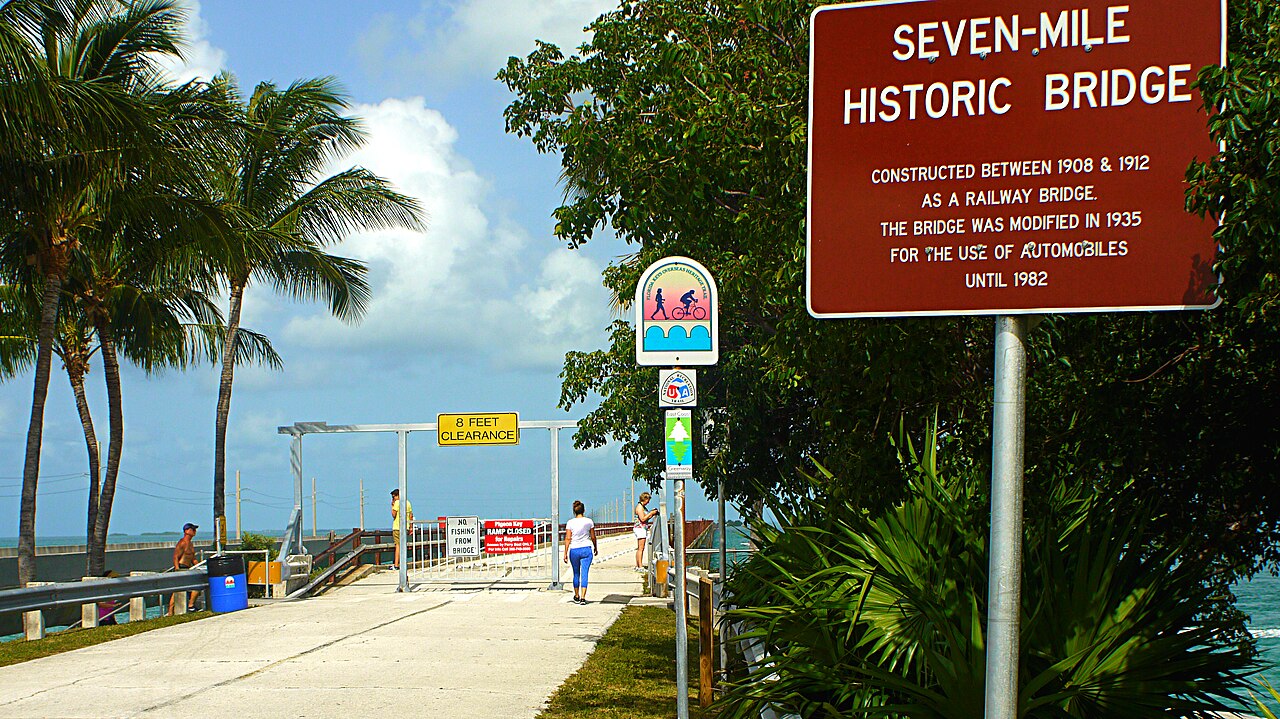
The Old Seven Mile Bridge—locals call it “Old Seven”—runs alongside. It was built as part of Henry Flagler’s Florida Keys Over-Sea Railroad, completed in 1912, later carried cars, and was retired from traffic when the new span opened. After a multi-year Florida Department of Transportation restoration, a 2.2-mile section from Marathon to historic Pigeon Key reopened on January 12, 2022 as a car-free path for walkers, runners and cyclists. That section is the outing.
Short version: walk or bike Old Seven from the Marathon end if you want the views and exercise; take the Pigeon Key Foundation’s train if you want the island and museum without the 4.4-mile round trip on foot; and treat the new bridge as a crossing you budget fuel and time for, not a scenic pull-off. The directory listing for the foundation’s tours and visitor center is Pigeon Key & Old Seven Mile Bridge Tours.
- New bridge = U.S. 1. Drive it, don’t park on it.
- Old Seven = the 2.2-mile car-free walk/bike path to Pigeon Key.
- Train for the island and museum; walk for views and exercise.
- Both start from the Marathon end, around MM 47.
Walking or biking Old Seven: parking and what to expect
The Old Seven access point is at the west end of Marathon near mile marker 47, on the Overseas Highway just past Knights Key Boulevard—on your right if you are heading south. Reporting at the 2022 reopening described an adjacent lot of about 35 spaces, with free parking and no charge to use the bridge itself. Thirty-five spaces fill on a pretty weekend morning and around sunset. Turning in and out across busy U.S. 1 takes patience; do not stop on the highway shoulder to wait for a space. Drop any address into Mile markers if you want to see which Key the directory files it under.
If the lot is full, the Florida Keys Overseas Heritage Trail runs a paved path through this end of Marathon. Visit Florida Keys notes that Faro Blanco (Faro Blanco Resort Marathon Florida Keys, Curio Collection by Hilton) is about a mile away on the Marathon side with trail access—useful if you are staying there or nearby. Isla Bella sits across U.S. 1 from the lot. Guest parking at a resort is for guests; do not treat a hotel or restaurant lot as public overflow.
The restored span is 2.2 miles each way to Pigeon Key, so a full walk out and back is about 4.4 miles on an exposed bridge deck with little shade. Bring more water than you think, a hat and sun protection, and turn around early on a hot afternoon. Vehicles are prohibited. When the bridge reopened, local reporting noted that fishing was not allowed on the restored span—follow the posted signs on the day, not an older forum post. The public section ends at Pigeon Key; the rest of the old bridge toward the Lower Keys is not part of the walk.
- Lot near MM 47, just past Knights Key Blvd, right side southbound.
- About 35 spaces—arrive early or come by bike on the Heritage Trail.
- 4.4 miles round trip with almost no shade: water, hat, early start.
- No cars on Old Seven; follow posted rules on fishing and access.
Pigeon Key: train vs walk-in, and what’s on the island
Pigeon Key is a tiny island under the old bridge that was once home to about 400 workers building the railroad. Today the Pigeon Key Foundation runs it as a historic and educational site with a railroad museum and original Flagler-era buildings from the early 1900s. Walking out on Old Seven is free, but entering the island is a separate paid admission, and riding the foundation’s train (a tram styled like a small locomotive) is a different, higher ticket.
The foundation publishes its train departure and return times, ticket prices and reservation rules on its tours page at https://pigeonkey.net/discover/guided-tours/. As of this update it says the train leaves from the Pigeon Key Visitors Center at 1090 Overseas Highway in Marathon, that you should check in before departure, and that you can buy same-day in person or reserve online up to two weeks ahead if you want a set time. Prices and the schedule change—read the live page the day you go instead of a screenshot.
The foundation suggests bringing snorkel gear, picnic supplies and binoculars: there are shady spots, picnic tables and a small beach area, and the island is a stop for birds. It also says no alcoholic beverages are permitted. Treat any snorkeling as a conditions call, not a promise, and see Florida Keys snorkeling from shore: honest spots by Key, conditions and safety for how shore water in the Keys usually behaves.
- Bridge walk is free; island entry and the train are paid.
- Check the foundation’s live page for departures and prices.
- Book ahead for a set train time; same-day tickets are sold in person.
- Picnic yes, alcohol no—per the foundation.
Driving the new Seven Mile Bridge
The new bridge is two lanes of U.S. 1 with no useful detour if traffic stops. It is one of the most photographed drives in Florida, and that is exactly why it is dangerous to treat it like a viewpoint. Do not slow down, stop or pull onto the shoulder for photos. Let a passenger take pictures, or walk Old Seven for the view instead. From the passenger seat you may spot a lone tree growing on a closed section of the old bridge that locals nickname Fred the Tree—it is a glance, not a stop.
Top off fuel or charge in Marathon before you commit across, especially southbound. Marathon is the last comfortable Mid-Keys service cluster before the bridge; Big Pine Key is the next combined stop on the other side. Pair this with Florida Keys gas stations and EV charging: plan Overseas Highway stops by Key so a low tank doesn’t become a bridge problem.
If you want a legal stop right after the crossing, Little Duck Key Veterans’ Memorial Beach sits at the west end of the bridge on the Bahia Honda stretch—confirm current access on the county source. Bahia Honda State Park is a few miles on and is its own day, with its own gate and capacity rules. Strong wind and storms make the span a slower, tenser drive; check the forecast and leave time rather than racing a sunset.
- No stopping, slowing or shoulder photos on the new bridge.
- Fuel or charge in Marathon before you cross southbound.
- Little Duck Key at the west end is the legal post-bridge stop.
- Passengers take the pictures; drivers watch the road.
Timing: sunrise, sunset and heat
Old Seven is popular for sunrise and sunset, and the open water on both sides is the point. Early morning is usually the most comfortable time to walk the full 4.4 miles; midday in warm months can be hard on an exposed deck. Sunset is beautiful and the busiest time for the small lot, so arrive well before golden hour if you want a space.
If you plan to visit Pigeon Key itself, work backward from the foundation’s train times or island hours rather than your sunset plan—the island and the bridge walk are on different clocks. Afternoon storms and lightning in the warmer months are a reason to cut a long, exposed walk short. This guide gives no sunrise times, crowd levels or weather; check a forecast the morning you go.
This works best as a half-day inside a Marathon stay, not a pull-off on a Miami-to-Key-West sprint. If you are passing through on a single day, see Key West day trip from Miami: honest timing, drive time and better alternatives for why that day has no slack. If Marathon is a hinge night on your road trip, Marathon as a Mid-Keys base: day plan and First-time Florida Keys road trip: overnight pacing MM 100 → 0 show where an Old Seven walk fits.
- Early morning is the comfortable full walk.
- Sunset is gorgeous and the lot fills fast.
- Pigeon Key runs on the foundation’s clock, not the sunset.
- Make it part of a Marathon stay, not a highway pull-off.
Food, nearby stops and how to plan it
Sunset Grille sits right at the Marathon end of the bridge and is the obvious before-or-after meal for an Old Seven walk; confirm kitchen hours and any parking rules on its own site. For a wider choice, browse Marathon restaurants and filter by what you want—this guide does not rank restaurants, and organic directory order is unsold.
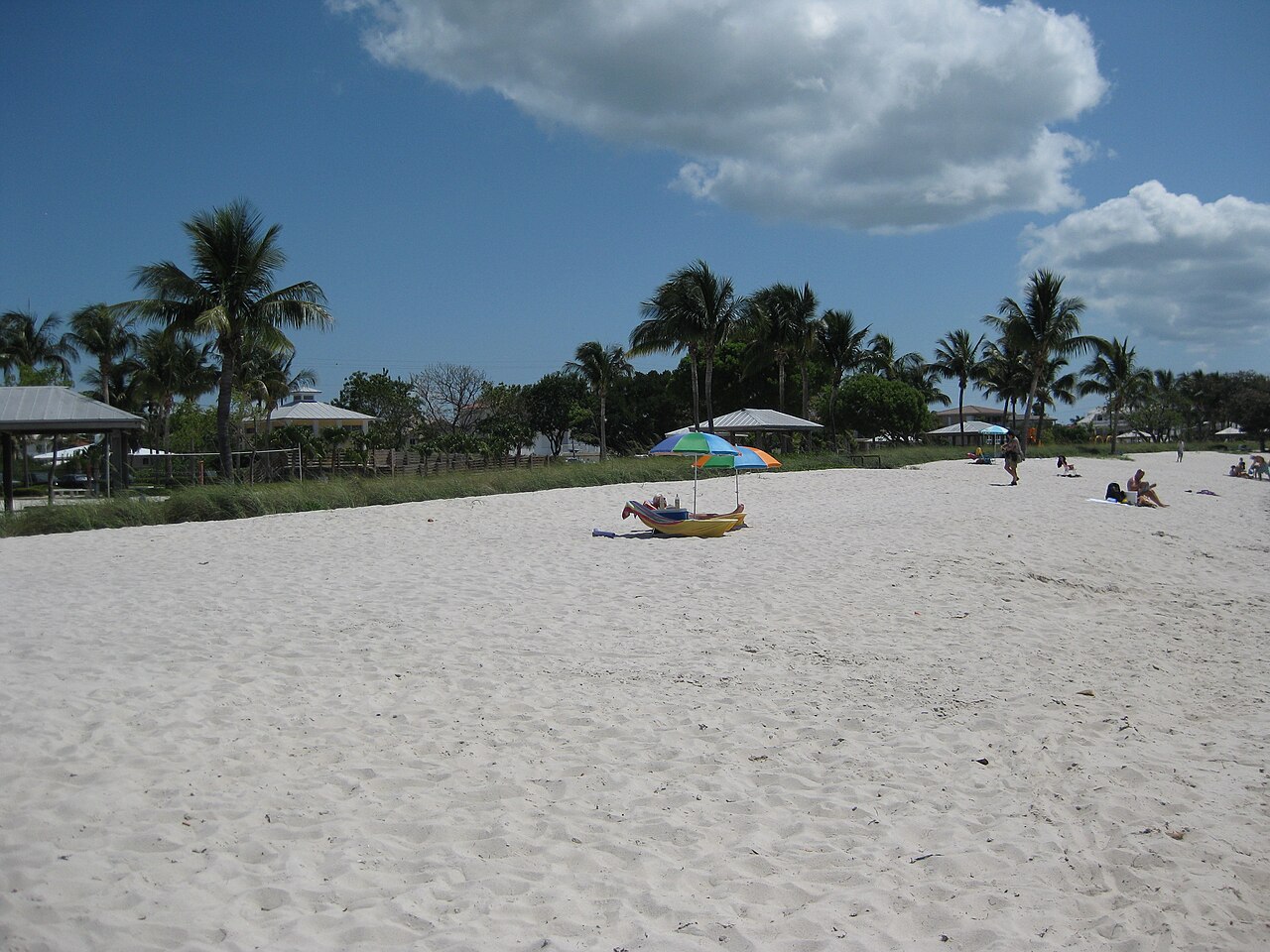
Good pairings on the same stretch: Sombrero Beach for a swim, Curry Hammock State Park toward the east end of Marathon, or the Lower Keys parks once you are across the new bridge. Pick one primary outing and one backup per day; Marathon’s advantage is that you don’t have to drive far between them.
Save the parking spot, Pigeon Key, a meal and a backup in Trip planner so the morning is a sequence, not a pile of tabs. For a ready-made skeleton, start from Day kits and cut it to the weather. Directory listings are locations plus source links, not live hours or a paid ranking—check the Pigeon Key Foundation and each business before you go.
- Sunset Grille is the bridge-end meal; confirm hours on its site.
- Pair with one swim or park stop, not three.
- Save parking, island, meal and backup in Trip planner.
- Listings are locations and sources, not live hours.
Frequently asked questions
Can you walk the Old Seven Mile Bridge?
Yes. A restored 2.2-mile section of the Old Seven Mile Bridge from Marathon to Pigeon Key reopened on January 12, 2022 for walkers, runners and cyclists. Vehicles are prohibited. Walking the bridge is free; entering Pigeon Key itself is a separate paid admission through the Pigeon Key Foundation.
Where do you park for the Old Seven Mile Bridge?
Use the lot next to the bridge at the west end of Marathon near mile marker 47, on the Overseas Highway just past Knights Key Boulevard (on your right heading south). Reporting at the reopening described about 35 spaces and free parking. It fills on nice weekends and at sunset. Don’t wait on the highway shoulder or use a hotel or restaurant lot unless you are a customer.
How long is the walk to Pigeon Key?
About 2.2 miles each way, so roughly 4.4 miles round trip on an exposed bridge with little shade. Bring water and sun protection, and start early in warm weather. If that’s too far, the Pigeon Key Foundation runs a train from its visitor center in Marathon.
How much does Pigeon Key cost and when does the train run?
The bridge walk is free, but island admission and the train are paid, with different prices for walk-in and train visitors. The Pigeon Key Foundation publishes current departure times, prices and reservation rules at https://pigeonkey.net/discover/guided-tours/. Check that page the day you go; KeysCompass doesn’t keep a fare table.
Can you stop on the Seven Mile Bridge to take pictures?
No. The new Seven Mile Bridge is two lanes of U.S. 1 with no shoulder for sightseeing and no detour if traffic stops. Let a passenger take photos, or walk Old Seven for the view. Little Duck Key Veterans’ Memorial Beach at the west end of the bridge is the legal place to pull over after the crossing.
How long is the Seven Mile Bridge?
The new Seven Mile Bridge that carries the Overseas Highway is 6.79 miles long and opened in 1982. The Old Seven Mile Bridge beside it dates to Henry Flagler’s railroad, completed in 1912; only the 2.2-mile section from Marathon to Pigeon Key is open as a public walking and biking path.
Is the Seven Mile Bridge worth a special trip?
Driving it is part of any trip to the Lower Keys or Key West, so you don’t need a special trip for that. Walking Old Seven to Pigeon Key is worth a morning or a sunset if you are staying in or near Marathon. It’s not a good add-on to a same-day Miami-to-Key-West run; see Marathon as a Mid-Keys base: day plan for how it fits a Marathon base.