This guide is original editorial content. Linked public sources and directory listings should be checked again for live schedules, closures, prices and access rules.
How this guide works
This is a launch-by-launch view of Florida Keys kayaking and paddleboarding, ordered the way you drive: north to south by mile marker, from Key Largo down to Key West. Each stop says where you put in, what kind of water you get and who rents boats there, with a link to its directory listing so you can save it in Trip planner. Nothing here is ranked or paid for; organic directory order is never sold.
The Keys suit paddlers because so much of the nearshore water is shallow. NOAA’s Florida Keys National Marine Sanctuary notes that many parts are reachable only by kayak, canoe or paddleboard, and that many of the sanctuary’s wildlife management areas are no-motor zones. The same shallowness is the catch: on a low tide or a windy day, a flat that looked easy on the map can leave you walking your boat.
Florida’s official saltwater paddling trail runs the whole chain. Segment 15 of the Florida Circumnavigational Saltwater Paddling Trail, the Florida Keys Overseas Paddling Trail, starts at John Pennekamp Coral Reef State Park and ends at Fort Zachary Taylor Historic State Park, an estimated 111 miles that the Florida Department of Environmental Protection plans as a nine- to ten-day trip. Most visitors will paddle one or two short pieces of it, which is what this guide is for.
Use Mile markers if you are not sure where a mile marker sits, and confirm current hours, fees, closures and rental availability on each park or operator page the day you go. This guide does not publish prices or opening times.
- Ordered north to south by mile marker, not ranked.
- Shallow water is the appeal and the catch: tide and wind decide the day.
- Confirm closures and rentals on the park or operator page that morning.
Upper Keys: Key Largo and Tavernier (MM 104–90)
MM 102.5, Key Largo: John Pennekamp Coral Reef State Park is the Upper Keys default and the official start of the Overseas Paddling Trail. The state’s trail guide describes 2.5 miles of marked mangrove wilderness trails for canoes and kayaks, and Florida State Parks says rentals and paddling trail maps are available at the park concession, run by Coral Reef Park Company. The canoe and kayak launch is over the bridge next to the education classroom; rental boats launch from behind the concession’s Snorkel Shed.
Pennekamp’s marked trail heads through a tidal mangrove creek toward the Atlantic, and the park shares water with powerboats coming and going from its marina, so keep to the edges near the channel. The famous reef is offshore and considered too far for a kayak; book a reef boat if coral is the goal, as covered in Key Largo snorkeling day: Pennekamp, reef boats and honest logistics and Florida Keys snorkeling from shore: honest spots by Key, conditions and safety. Florida State Parks posted in July 2026 that construction has closed one of the park’s two boat ramps and reduced trailer parking, so check the park page before a busy weekend.
MM 104, Key Largo: Florida Bay Outfitters is a paddlesports shop on the Overseas Highway with kayak, paddleboard and canoe rentals and guided mangrove tours, a useful option if you want a rental or guided trip outside the park.
Tavernier (around MM 90): two smaller operators run guided mangrove trips. Tavernier Creek Kayak Tours leads educational paddles through Tavernier Creek, which links the Atlantic and bay sides, and PADDLE! the Florida Keys rents kayaks and paddleboards and runs guided eco-tours and beginner instruction. Browse the rest of the area on Key Largo and Tavernier.
- Pennekamp: marked mangrove trails, rentals and trail maps at the concession.
- Watch for marina boat traffic on the way out to the Atlantic.
- The reef is a boat trip, not a paddle.
- Tavernier Creek connects the ocean and bay sides.
Upper Keys: Islamorada, Indian Key and Lignumvitae (MM 78.5–77.5)
Before you plan this stop, check the closure. Florida State Parks posted that, effective April 2026, Indian Key Historic State Park is completely closed to the public while contractors rebuild its dock, a project slated to take up to six months. Until the park page says it has reopened, do not plan to land on the island.
When it is open, Indian Key is a classic Keys paddle. The 11-acre island sits about half a mile offshore of Lower Matecumbe near MM 78.5. Florida State Parks suggests launching at the public ramp at Indian Key Fill, choosing a light-wind day and going at high tide so you float over the shallow seagrass beds, then landing only at the signed Kayak Landing on the island’s south side. Its own trip notes put Indian Key Fill to the Indian Key kayak landing at 1.66 miles round trip. There are no facilities on the island, the shoreline is rocky (wear water shoes), pets are not allowed, and the park fee is paid in cash at an iron ranger.
The same Indian Key Fill launch reaches Lignumvitae Key Botanical State Park on the bay side, 2.84 miles round trip to its kayak landing by the parks system’s count, and the entrance to a set of mangrove creeks, 1.84 miles round trip. Lignumvitae’s floating kayak dock is just south of the main dock. Check that park’s page for current tours and status before you go.
MM 77.5: Robbie’s of Islamorada, the marina known for tarpon feeding, is where Florida State Parks points visitors for Indian Key kayak rentals. The Kayak Shack there, listed as Florida Keys Kayak and Ski, rents kayaks for self-guided trips toward Indian Key or nearby mangrove tunnels and runs guided mangrove and sunset tours, with pre-launch instruction for first-timers. More Islamorada stops are on Islamorada.
- Indian Key closed for dock work from April 2026: check the park page.
- Launch at Indian Key Fill; go at high tide on a light-wind day.
- Land only at the signed Kayak Landing; bring cash, water and water shoes.
- Robbie’s is the rental base for Indian Key.
Middle Keys: Long Key and Curry Hammock (MM 67.5–56)
MM 67.5, Long Key: Long Key State Park has what NOAA describes as a marked, 1.5-mile paddling trail inside a protected lagoon, and the park’s calm, shallow water along a natural shoreline is a good first paddle. Florida State Parks says you can bring your own kayak or canoe or rent one from the ranger station; there are no boat ramps at the park, so trailer boats need a marina. Kayakers there have reported loggerhead and green sea turtles. As of September 2026 the park may close for portions of the day because of King Tide flooding, so check the alert first. More on the area: Layton & Long Key.
Ranger-led kayak tours run on Fridays, weather and tide dependent, alternating between Long Key and Curry Hammock State Parks. Space is limited; call or stop at either ranger station to ask about the next one.
MM 56, Marathon’s east end: Curry Hammock State Park publishes two paddling routes. The 1.5-mile path circles Little Crawl Key in about an hour and packs in a mangrove tunnel, a deep-water lagoon, grassy flats, sandbars and open ocean; the 5-mile route takes at least four hours and heads along mangroves and around another island. The park warns that on the lowest tides the mangrove tunnel may be difficult to impossible, and points to a sandbar just east of the kayak launch as the low-tide alternative. Rentals at the launch are provided by Whenever Water Sports, per the park. Paddlers there have reported horseshoe crabs, starfish, upside-down jellyfish, dolphins and manatees, and the park notes that on windy days the water belongs to kiteboarders, so pick a calm morning.
- Long Key: marked lagoon trail, rentals at the ranger station, no boat ramp.
- Check Long Key’s King Tide alert before driving there.
- Curry Hammock: 1.5-mile loop or 5-mile route; skip the tunnel at dead low tide.
- Friday ranger-led paddles alternate between the two parks.
Middle Keys: Marathon, Sister Creek and Boot Key (around MM 50)
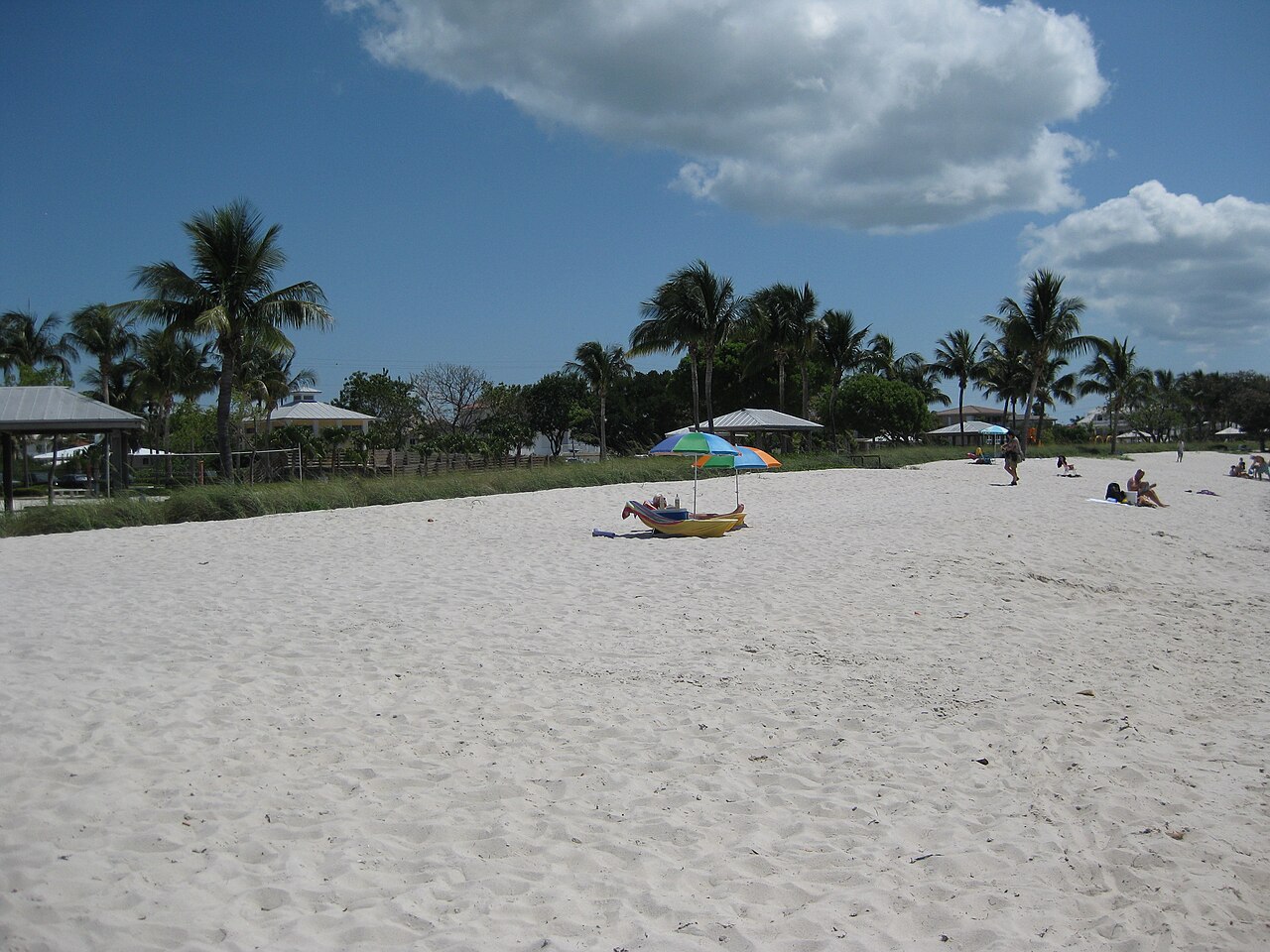
Sombrero Beach is Marathon’s family swim beach, and the state paddling trail guide points paddlers to the kayak launch on the west side of the swimming beach at the mouth of Sister Creek. From there, Sister Creek leads into a maze of shallow mangrove tunnels through undeveloped Boot Key. The trail guide’s warning is the honest one: be careful not to get lost.
Florida Rambler’s account of the route adds useful detail: the sandy launch is next to the fishing pier through a pedestrian gate in the fence, about a 100-foot carry to the water, the first stretch of creek is a wide waterway used by powerboats (stay near the shoreline), and the interior trails are unmarked, so take a satellite map and be ready to backtrack. They found the shallow lagoons easiest at medium to high tide, and the sheltered route worked on a windy day. Lot parking can fill on good beach afternoons, so go early.
If you would rather follow a guide, SpongeBob Kayak Eco Tours runs guided mangrove and sunset paddles around Boot Key Harbor, and Florida Keys Kayak & Paddleboard runs guided Marathon eco-tours and advertises equipment delivery along the Keys. Compare more on Marathon Tours, Rentals & Outfitters.
Marathon works well as a paddling base because Curry Hammock, Long Key and Sister Creek are all a short drive apart. Pick one paddle per day plus a dry backup. The Marathon to Long Key paddling day kit on Day kits puts Curry Hammock, Long Key, the Boot Key tours and the Sister Creek launch on one list you can add to the planner; Marathon as a Mid-Keys base: day plan shows how a morning on the water fits a Marathon hub day, and Marathon has food, fuel and lodging.
- Launch at the mouth of Sister Creek, west side of Sombrero Beach.
- Boot Key’s mangrove trails are unmarked: carry a map and expect to backtrack.
- Go at medium to high tide, and early for parking.
- Guided Boot Key Harbor tours if you would rather not navigate.
Lower Keys: Bahia Honda to Sugarloaf (MM 37–17)
MM 37: Bahia Honda State Park has a canoe and kayak launch, and the park concession, Bahia Honda Kayak Rentals, rents stable sit-on-top single and double kayaks. The park can close temporarily when its day-use areas reach capacity, so arrive early on weekends and holidays. Bahia Honda is a state park, not a town; provision on Big Pine Key first. See Bahia Honda.
Big Pine Key: Big Pine Kayak Adventures runs naturalist-led kayak nature tours and rentals into the Lower Keys backcountry. Note from the state trail guide: from Big Pine Key westward, long-distance paddlers are largely limited to the Atlantic side. More Big Pine stops are on Big Pine Key and in Big Pine Key guide: Key deer, Looe Key, groceries and where to base in the Lower Keys.
Ramrod Key: Ramrod Park is a Monroe County bayside passive park that the county describes as good for exploring, launching kayaks and paddleboards, and watching sunsets. It has limited amenities, which is part of its appeal for a quiet self-guided launch. Browse Torch & Ramrod Keys for nearby stops.
MM 17: Get Up and Go Kayaking — Sugarloaf Key runs small-group guided tours from Sugarloaf Marina in clear-bottom kayaks through mangrove passages and shallow sanctuary water. See Cudjoe & Sugarloaf Keys.
- Bahia Honda: concession sit-on-top rentals; arrive early on busy days.
- Big Pine: guided backcountry tours or rentals.
- Ramrod Park: a quiet county launch with few amenities.
- Sugarloaf: guided clear-kayak tours from the marina.
Key West end: Geiger Key and Fort Zach (MM 10.5–0)
MM 10.5, Geiger Key: Geiger Key Paddle Hut is the closest mangrove paddle to Key West in this guide. It runs small-group guided mangrove eco-tours of about two hours, private tours and self-guided kayak and paddleboard rentals, and says every rental gets a safety briefing and an aerial-map overview of the mangrove trail entrances. Its guided tours include a shuttle from Key West, which helps if you are staying in Old Town without a car. See Big Coppitt & Geiger Keys.
Fort Zachary Taylor Historic State Park is the official end of the Overseas Paddling Trail. The state trail guide says normally only day users who launched from the park may land there; long-distance paddlers need to call ahead to use the designated landing spot. Paddling around Key West itself means sharing water with boat traffic and, just past the fort, large ships such as cruise liners entering or leaving the harbor. For most visitors a guided mangrove trip outside town is the calmer plan. Compare more operators on Key West Tours, Rentals & Outfitters and the wider Key West directory.
- Geiger Key: guided mangrove tours with a Key West shuttle, or self-guided rentals.
- Fort Zach landings are for park launches and pre-arranged trail paddlers.
- Key West harbor has big-ship traffic: a mangrove trip outside town is calmer.
Tides, wind and safety
Check tides and the forecast before every paddle. NOAA’s sanctuary page puts it plainly: consult tides and weather before heading out, or the shallow flats could leave you high and dry. Mangrove tunnels and seagrass flats that are easy at high tide can be impassable at low tide, which is why Florida State Parks recommends high tide for Indian Key and warns about Curry Hammock’s tunnel at the lowest tides. Use the National Weather Service Key West marine forecast for wind; a light-wind morning is the easy window for most of these routes.
Florida treats kayaks, canoes and paddleboards (outside swimming areas) as vessels. FWC requires one U.S. Coast Guard–approved wearable life jacket for each person on board, worn by children under 6; a whistle, horn or bell that can be heard for at least half a nautical mile; and a white light if you are out between sunset and sunrise or in restricted visibility. Paddlecraft may use the Intracoastal Waterway only to cross it directly, when there is no other open water, or in an emergency. FWC also advises wearing a brightly colored life jacket, paddling with others, and leaving a float plan with someone on shore.
The water around the Keys is part of the Florida Keys National Marine Sanctuary, and some areas are no-motor or no-entry zones; NOAA’s free Marine Sanctuary Explorer app can show where you are. Do not drag your boat or push off across seagrass or coral, and stay out of shallow areas you would have to walk through. Give manatees, dolphins, turtles and sharks space: watch, never touch, feed or chase. Pennekamp’s park rules, for example, ask people to stay at least 50 feet from manatees.
Dress for sun, not just water. Florida State Parks recommends long sleeves, long pants and a wide-brim hat in lightweight, quick-drying fabric, plus water shoes where shorelines are rocky. Carry more water than you think you need, and turn back early if afternoon storms build.
- Tide and wind first; high tide for flats and tunnels.
- Life jacket for every person; under-6s must wear one.
- Whistle always; white light after sunset.
- Watch wildlife from a distance; don’t drag over seagrass.
Rent or bring your own
Renting at the launch is the simplest plan for most visitors. Florida State Parks lists rentals at Pennekamp’s concession, the Long Key ranger station, the Curry Hammock launch (through Whenever Water Sports) and the Bahia Honda concession, and points Indian Key paddlers to Robbie’s. Rental fleets, hours and weather cancellations vary, so confirm with the operator the morning you go rather than trusting a screenshot.
Delivery is common in the Keys. Several outfitters, including Florida Keys Kayak and Ski at Robbie’s and Florida Keys Kayak & Paddleboard, advertise kayak delivery to resorts and rentals, which works well if your lodging is on the water. Guided tours make sense for unmarked mangrove trails like Boot Key or the Lower Keys backcountry, where a guide knows the cuts and the tide.
Bringing your own is easy at state-park launches like Long Key and Curry Hammock and at county or city launches like Ramrod Park and Sister Creek. FWC says nonmotorized vessels under 16 feet do not need Florida registration or a title; a kayak with a motor does. If you are also trailering a boat, use Florida Keys boat ramps: fees, parking and launches by Key and Public Boat Ramps & Docks for ramp fees, parking and trailer rules; most paddle launches here are not trailer ramps.
Save a primary launch, a sheltered backup and your overnight base in Trip planner, and start from Day kits if you want a ready-made day around the paddle. For more operators by island, browse Tours, Rentals & Outfitters. Listings link to their public sources, and placement in the directory is never sold.
- Rent at the park launch for the simplest day.
- Delivery suits waterfront rentals.
- Hire a guide for unmarked mangrove trails.
- Save launch, backup and base in Trip planner.
Frequently asked questions
Where should beginners kayak in the Florida Keys?
Start with a protected, marked route at a state park. Long Key State Park (MM 67.5) has a marked 1.5-mile paddling trail in a sheltered lagoon with rentals at the ranger station, and John Pennekamp Coral Reef State Park (MM 102.5) has marked mangrove trails with rentals and trail maps at the concession. Curry Hammock’s 1.5-mile loop takes about an hour. Pick a calm morning near high tide, and consider a guided tour for unmarked trails.
Can you kayak to Indian Key?
Normally yes: launch at the public ramp at Indian Key Fill near MM 78.5, paddle about half a mile across seagrass flats at high tide, and land only at the signed Kayak Landing on the south side. But Florida State Parks posted that, effective April 2026, Indian Key Historic State Park is completely closed while its dock is rebuilt, a project slated to take up to six months. Check the park page before you go.
Do I need to know the tides to kayak in the Keys?
Yes. Much of the nearshore water is very shallow, and NOAA warns that the flats can leave you high and dry if you ignore tides and weather. Mangrove tunnels like Curry Hammock’s can be difficult to impossible at the lowest tides, while high tide lets you float over Indian Key’s seagrass beds. Check a tide chart and the National Weather Service Key West marine forecast before you launch.
Can you see manatees while kayaking in the Florida Keys?
Sometimes, but no sighting is guaranteed. Florida State Parks lists manatees among the wildlife paddlers have encountered at Curry Hammock and Indian Key, and notes they occasionally appear in Pennekamp’s marina and Largo Sound. If you see one, keep your distance and never touch, feed or chase it. Pennekamp’s park rules ask for at least 50 feet.
Where can I rent a kayak in Marathon?
Curry Hammock State Park at Marathon’s east end has rentals at its kayak launch, provided by Whenever Water Sports according to the park. Guided Boot Key Harbor and mangrove tours are run by operators such as SpongeBob Kayak Eco Tours, and Florida Keys Kayak & Paddleboard runs Marathon eco-tours and advertises delivery. Browse Marathon Tours, Rentals & Outfitters for more and confirm availability with the operator.
What do I need to bring on a kayak in Florida?
FWC requires one U.S. Coast Guard–approved wearable life jacket per person (children under 6 must wear one), a whistle, horn or bell audible for half a nautical mile, and a white light if you are out between sunset and sunrise. Add sun protection, plenty of water, water shoes for rocky landings and a phone in a dry bag, and leave a float plan with someone on shore.
Can I paddle the whole Florida Keys?
Yes, as an expedition. The Florida Keys Overseas Paddling Trail, Segment 15 of the Florida Circumnavigational Saltwater Paddling Trail, runs about 111 miles from John Pennekamp Coral Reef State Park to Fort Zachary Taylor Historic State Park, and the Florida Department of Environmental Protection estimates nine to ten days. Its text guide and map book cover campsites and landing rules.