This guide is original editorial content. Linked public sources and directory listings should be checked again for live schedules, closures, prices and access rules.
Three ways to fish from Key West
Most Key West fishing trips come in three formats, and choosing the format first saves a lot of comparing. A party boat (also called a head boat) is a larger boat that sells individual places to anyone who books, so your group fishes alongside other anglers and the crew. A shared or split charter puts you on a smaller charter boat with a few strangers, so everyone splits one boat. A private charter gives your group the whole boat and the captain's plan for the day.
The north side of Key West is the traditional home base. Key West City Marina at Garrison Bight is the City marina that hosts the Historic Charter Boat Row along the Palm Avenue causeway. Stock Island, the next island east, is the other cluster: several marinas there host charter captains, and the Stock Island marina guide (Stock Island marinas: slips, fuel and ramps) covers which dock is which. Do not confuse the City marina with the separate, privately run Garrison Bight Marina, which its operator says has been closed for redevelopment since July 1, 2025.
Nothing on this page is ranked. Operators appear because they have a live KeysCompass page that points to their own source, and the order inside each group is geographic. We do not sell placement. A Verified source label means the listing's source was checked, not a paid rank.
- Pick the format first: party boat, shared trip or private charter.
- Charter Boat Row sits at City Marina, Garrison Bight, on the north side of Key West.
- Stock Island marinas are the second charter cluster, one bridge east.
- The private Garrison Bight Marina is a different, closed property.
Private charters: whole boat, your plan
A private charter suits a family, a group of friends or anyone with a specific target. Price is set per boat, not per person, so the cost per head drops as the group fills the boat. The captain can shape the day around your group: shallow backcountry and flats, the reef, wrecks, or a mix.
A few live Key West and Stock Island examples show the range. Purple Heron Charters is a small-boat flats and backcountry guide; the operator describes an 18-foot backcountry boat for two to three anglers, departing from Charter Boat Row unless the captain agrees on another spot. Rusty's Bucket Charters runs nearshore, wreck and reef fishing from Hurricane Hole Marina on Stock Island. Fun In The Sun Charters & Boat Rentals is based at Stock Island Yacht Club and lists captained charters for one to six passengers, with fishing as one of several trip types.
If the goal is spearfishing or lobstering rather than rod and reel, that is a specialist trip. Wet Dream Charters on Stock Island runs reef, wreck and bluewater spearfishing and offers lobstering during the lobster season it lists on its site. Spearfishing and lobster harvest are prohibited inside Dry Tortugas National Park, so keep those trips to waters where they are legal.
- Private boats are priced per boat; fill seats to bring the per-person cost down.
- Flats and backcountry boats are often small; ask how many anglers fit.
- Spearfishing is a specialist charter and is banned inside Dry Tortugas National Park.
Party boats and shared trips: buy a spot, not the boat
A party boat sells individual places. It works well for a solo angler, a couple, or a family that wants to try fishing without paying for a whole boat. The trade-off is space and control: you fish where the boat goes, at the rail with other people, and the crew splits its attention across everyone.
A shared or split charter is the middle option. You book one or more places on a normal six-passenger charter boat, and the rest of the seats go to other anglers. Ask how many guests the trip needs before it will leave the dock and what happens if it does not fill, because a shared trip may not sail if it misses the operator's minimum, as well as for weather.
All three of these Charter Boat Row operators run from 1801 N Roosevelt Boulevard. Gulfstream Party Boat has run party-boat trips there since 1947 and also offers private charters. Linda D Sportfishing sells split charters for up to six anglers from docks 19 and 20, alongside private trips. Cowboy Cowgirl SportFishing Charters offers both shared and private trips. For every Key West operator listing, see Key West Tours, Rentals & Outfitters.
- Party boat: sold by the person, many anglers, crew-assisted.
- Shared trip: a few strangers split one charter boat.
- Ask for the minimum number of guests needed to sail, and what happens if the trip doesn't fill.
How to decide: group, budget style, stomach and target
Group size. Many Key West charter boats take up to six passengers; Fun In The Sun, for one, lists its captained charters for one to six. A group of seven or more usually means two boats, a larger vessel or a party boat. Ask whether children count toward the limit. A solo angler or a couple is the classic party-boat or shared-trip customer.
Budget style. A party boat or a shared trip is priced per person. A private charter is priced per boat, so what each person pays depends on how many seats your group fills. Ask what the quote includes before comparing two boats: fishing license, bait, tackle, ice, fish cleaning, any fuel surcharge and the crew tip are often handled differently.
Seasickness. If anyone in the group gets seasick, say so when you book. Ask where the captain expects to fish that day and what the plan is if the wind is up. Sheltered backcountry water and open reef or offshore water are very different rides. For the long open-water crossing to Dry Tortugas, the National Park Service notes that winter generally brings stronger winds and summer calmer, wetter weather.
Target species. Tell the captain what you want to catch and let them say what is realistic that week. Purple Heron's own trip notes say a half day is better for general fishing and beginners, and they recommend longer trips for technical flats species such as bonefish, permit and tarpon. If one species is the whole point of the trip, ask about the season before you book.
- Seven or more people: plan on two boats or a larger vessel.
- Compare what's included, not just the headline quote.
- Flag seasickness when you book and ask where you'll fish.
- Name your target species and ask if the season is right.
Questions to ask the captain before you pay
Run through the same list with every operator. Who is the captain, and which boat will we be on? Where exactly does the boat leave from: Charter Boat Row, a Stock Island marina or somewhere else? How many passengers does the trip carry? Is a fishing license included for everyone? Are bait, tackle and ice included? Can we keep legal fish, and will the crew clean them? Is there a restroom aboard? Can we bring food and drinks, and is there a cooler?
Then ask about the money and the weather. Is the quote the full total, or are a fuel surcharge and crew gratuity extra? What is the deposit and cancellation policy, and who decides when the weather is too rough? For a shared trip, what is the minimum number of guests needed to sail? Write the answers down and save the confirmation offline.
Plan the land side around the boat. Parking, check-in time and the meeting point belong to the operator, not this guide. Save the dock, a bait shop from Tackle & Bait and your lodging in Trip planner so the morning runs as one sequence.
- Same question list for every boat.
- Ask whether a fuel surcharge or tip is extra to the quote.
- Know who calls a weather cancellation and what happens to your money.
- Save the dock, bait stop and hotel in the trip planner.
Dry Tortugas: day trip, camping or a multi-day boat
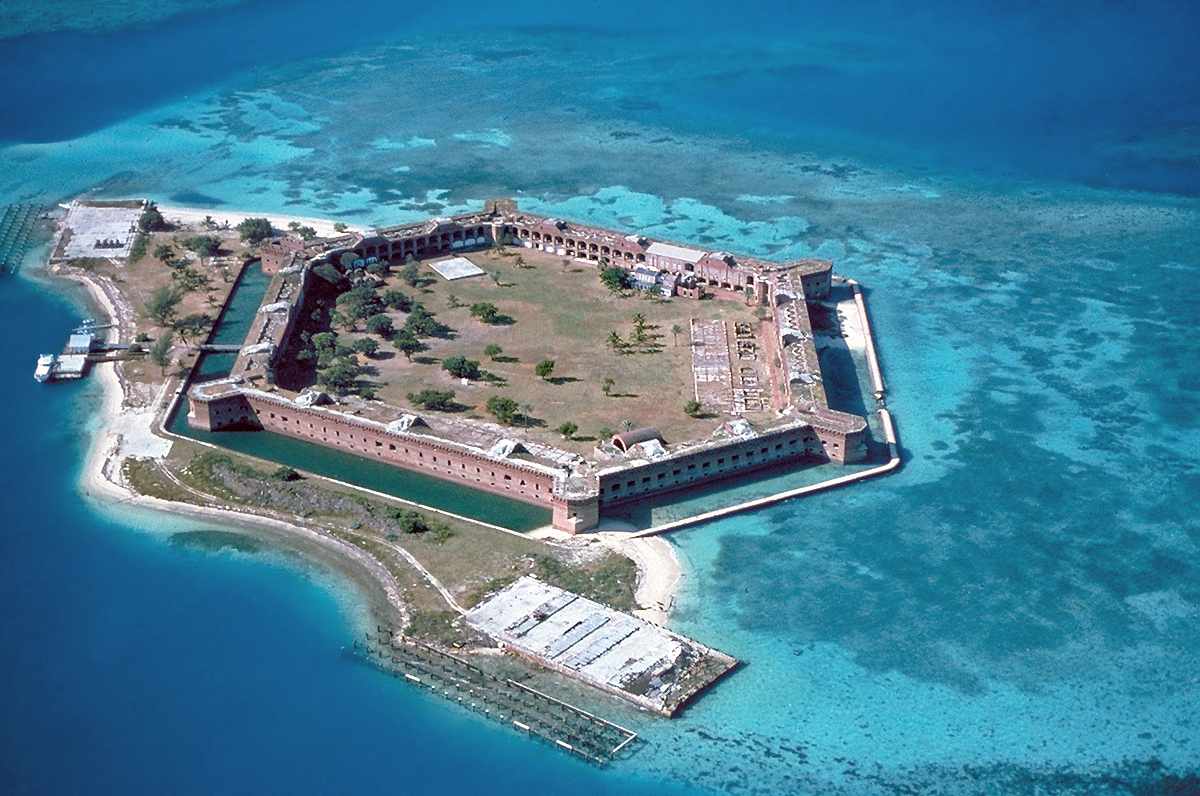
Dry Tortugas National Park is about 70 miles west of Key West and is reached only by boat or seaplane. For most visitors it is a day trip on the National Park Service ferry concession, Yankee Freedom (Yankee Freedom Ferry to Dry Tortugas), or the seaplane concession, Key West Seaplane Adventures (Key West Seaplane Adventures to Dry Tortugas). The ferry-versus-seaplane decision is covered in Dry Tortugas day trip from Key West: ferry vs seaplane planner. The park listing is Dry Tortugas National Park & Fort Jefferson.
Staying overnight means one of three things. First, camping on Garden Key (Garden Key Campground). NPS says the campground is primitive, regular sites (up to six people) are first-come, first-served and cannot be reserved, and only the large group site for 10–20 people is reserved in advance. Ferry campers book through Yankee Freedom, which carries a limited number of campers each day, and the seaplane does not carry campers. Camping fees are separate from transportation and are paid through Recreation.gov Scan & Pay. Campers must bring their own tent, water, food and fuel, and compressed gas canisters are not allowed on the ferry, so plan to cook on charcoal.
Second, a permitted guide. NPS keeps a list of tour operators who hold permits to take visitors into the park for fishing, diving, snorkeling and wildlife viewing. Finz Dive Center on Stock Island appears on that list for diving and snorkeling trips. Ask any operator whether they are on the current NPS list, and whether the trip is a long day or includes nights at anchor. Third, your own or a chartered boat staying at anchor. NPS allows overnight anchoring only in sandy-bottom areas within one nautical mile of the Garden Key lighthouse, and there is no food, water or fuel for sale in the park, so bring at least one extra day of supplies.
Fishing rules inside the park differ from a normal Key West trip. NPS says a Florida saltwater fishing license is required for anyone 16 or older (with the state's exemptions), only circle hooks are allowed, spearfishing and lobster harvest are prohibited, fishing is closed in the Research Natural Area, and private boaters must file a boat permit at Garden Key before fishing. Ferry tickets include park entrance but not camping fees, and private boaters buy entrance passes through Recreation.gov.
- Day trip: ferry or seaplane concession; see the Dry Tortugas planner.
- Camping: Garden Key only, first-come regular sites, ferry camper places are limited, no seaplane campers.
- Multi-day by boat: ask if the operator is on the NPS permitted list; anchoring rules are strict.
- In the park: circle hooks only, no spearfishing or lobstering, license rules apply.
Frequently asked questions
Does this guide rank Key West fishing charters?
No. We do not rank charters. The operators named here have a live directory listing tied to their own source, and they are grouped by trip type and dock, not by preference. Organic order is never sold. A Verified source label means the source was checked, not a paid rank.
What is the difference between a party boat and a private charter?
A party boat, also called a head boat, sells individual places on a larger boat, so you fish alongside other anglers. A private charter gives your group the whole boat and lets the captain plan the day around you. A shared or split charter sits in between: a few unrelated anglers split one smaller charter boat.
Can I book a fishing charter on my own?
Yes. A party boat or a shared trip is the usual route for one or two people, because you pay for a place rather than the whole boat. Ask how many guests a shared trip needs before it will sail. A private charter also works for one angler if the budget allows.
Do I need my own fishing license on a Key West charter?
Ask the operator, because policies differ. Some captains say on their own sites that licenses are included. Inside Dry Tortugas National Park, NPS says a Florida saltwater fishing license is required for anyone 16 or older, with the state's exemptions.
Where do Key West fishing charters leave from?
Many leave from the Historic Charter Boat Row at Key West City Marina, Garrison Bight, on the north side of Key West. Others leave from Stock Island marinas such as Hurricane Hole Marina or Stock Island Yacht Club. Confirm the exact dock with the operator when you book.
Can I camp at Dry Tortugas or stay overnight on a boat?
Camping is allowed only at the primitive Garden Key campground. Regular sites are first-come, first-served, the group site must be reserved, ferry campers book through Yankee Freedom, and the seaplane does not take campers. Boats may anchor overnight only in sandy-bottom areas within one nautical mile of the Garden Key lighthouse. Check the current rules on nps.gov/drto before you go.
Does this guide publish prices or trip times?
No. Rates, trip lengths, departure times and surcharges change often and differ by boat. Each listing links the operator's own source. Get the full quote and the meeting time from the operator, in writing.